
Valued at $71.2 billion, the bank's market capitalisation is more than that of global banks like Barclays, JP Morgan Chase and Credit Suisse.

For the banking system a new cycle starts in FY2024. It's fraught with fresh challenges on asset quality and profitability, warns Tamal Bandyopadhyay.

Capital expenditure by 54 large central public sector enterprises and five departmental arms, having a capex minimum target of Rs 100 crore, rose 93 per cent year-on-year (YoY) in the April-May period to Rs 1.39 trillion. The National Highways Authority of India (NHAI) and the Railways have started this financial year's capex cycle on a stronger note. In the first two months of FY24, the 54 CPSEs, along with the departmental arms, achieved 19 per cent of their combined budget target of Rs 7.33 trillion, Business Standard has learnt.
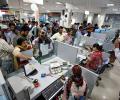
Amid slowdown blues, the government has unveiled a raft of measures over the past few months aimed at improving liquidity in the system, moderating interest rates as well as credit growth apart from addressing stress in the NBFC sector.

DDinesh Kumar Khara is someone who cares for others's ideas and suggestions.
If he takes the people along with him (which he always does); cares for the customers (80 per cent of SBI's new customers are in the 20-40 age group); and doesn't take his eyes off technology, his job is done, says Tamal Bandyopadhyay.

Walmart-owned digital payments firm PhonePe has decided to halt its proposed acquisition of Goldman Sachs- and Xiaomi-backed ZestMoney, a Bengaluru-based buy now, pay later (BNPL) platform. The deal, which was poised to fetch anywhere between $150-200 million and $300 million, has hit a snag over lapses in due diligence, disagreements over valuation, sustainability of the business, and shareholding structure of ZestMoney, according to people familiar with the matter. The collapse of the deal is also being attributed to a slowdown in the financial technology (fintech) sector in the midst of a funding winter, difficult regulatory environment, and macroeconomic uncertainty, informed other sources.

Pre-Budget excercise next month should scrupulously avoid adventurism of all types and refrain from making excessively ambitious projections on revenue and expenditure numbers for 2023-24, suggests A K Bhattacharya.

Dealers across brands are slashing prices by Rs 20,000 to over Rs 1 lakh, depending on the car model.

For longer tenure products, they offer higher returns compared to other instruments. But for shorter tenures, things are getting tighter for investors.

The coming years could be exciting for Bandhan Bank, IDBI Bank, IDFC First Bank, Federal Bank, and CSB Bank.

Here are the key decisions announced by the Reserve Bank of India on Thursday.

'Starting an SIP now and continuing with it is likely to translate into high returns over the long term.'

Like everything else, the structure of banks may change, and banks may depend more on digital technologies and artificial intelligence for dealing with both their customers and employees.

Personal loans have about 80 per cent share in exposures restructured under regulatory package 2.0 by eight banks who have declared results for the second quarter. The remaining 20 per cent are loans to individuals used for business and credit to MSMEs. The total recast exposure of these banks under One Time Restructuring (OTR 2.0) was Rs 27,708 crore.

Enjoying the backing of the regulator, Gill has identified the core problems, ring-fenced the banks from "influencers" and is in the process of building a new team. Now, he needs to play a Vikram Pandit for YES Bank, says Tamal Bandyopadhyay.

That's the only way to convince those who have money to return to the bank fold, ditching other asset classes, says Tamal Bandyopadhyay.

Warning that the new year will be riskier than the previous two in terms of growth, inflation and the perils of monetary policy normalisation on consumption demand in particular, along with other external risks, a Wall Street brokerage has pencilled in an 8.2 per cent GDP growth next fiscal, with more downside risks to the projection. The biggest risk to the projection is a derailed consumption demand that has been the main growth driver in the past many years, said the Bank of America Securities India house economists who still believe that consumption demand will remain the key driver of growth next fiscal as well.

Seattle is not only the first American city to ban caste discrimination but is the first jurisdiction at any level globally outside South Asia to do so.

For banks to cut loan rates, the cost of deposits needs to come down, and there is no sign of that happening.

Mall owners have incurred a loss of around Rs 3,000 crore during the ongoing second wave of the COVID-19 pandemic over the last eight weeks due to lockdowns and restrictions imposed by various states across the country. In the wake of the second pandemic wave, around 25 per cent of the business of the retail side across categories has been lost and this is going to impact the mall owners as well, according to Shopping Centres Association of India (SCAI) Chairman Mukesh Kumar. However, mall owners would go ahead and complete their under-construction projects as they anticipate demands for commercial and office space once the pandemic recedes, the SCAI said.

After outperforming the broader market and their public sector peers for the better part of the post-Lehman period, private sector banks - such as HDFC Bank, ICICI Bank, Axis Bank, and Kotak Mahindra Bank - are now underperforming. Last week, the Nifty Private Bank index was up just 6 per cent year-to-date in the calendar year 2021, against nearly 13 per cent rally in the Bank Nifty and a 15 per cent rise in the benchmark Nifty50. Public sector (PSU) banks, such as State bank of India, Bank of Baroda, and Punjab National Bank, are now rally leaders and outperforming the broader market. The Nifty PSU Bank index was up 42 per cent since the beginning of this calendar year. But on a longer term, the Nifty Private Bank index is up 101 per cent since March 2016, against a 118 per cent rally in the Bank Nifty and just 2 per cent rise in the Nifty PSU Bank index in the period.

Finance Minister Nirmala Sitharaman on Saturday said the new tax regime will benefit the middle class as it will leave more money in their hands. Talking to reporters after the customary post-Budget address to the central board of the RBI, she said it is not necessary to induce individuals to invest through government schemes but give them an opportunity to make a personal decision regarding investments. "...the way we allowed for standard deduction and also the rates which have been fixed, tax rates which have been fixed for different slabs, it has actually left more money in the hands of the people, the taxpayer, the household," she said.

Future group promoter Kishore Biyani's stake fell consistently across group companies since December 2019 after American retail major Amazon infused funds in a Future group promoter entity and the group companies started showing signs of financial distress due to closure of stores due to Covid-19 pandemic. As lenders take Future group companies to the bankruptcy courts to recover their dues under the Insolvency and Bankruptcy Code, the shareholders of Future group companies are staring at complete wipeout of their investments as secured lenders get top priority in any potential recovery, say lawyers. "The fate of all Future group shareholders is now sealed with them looking at a complete loss.

The analyst said since servicing of principal and interest on loans will beome challenging for mall operatos in the next couple of months.

Collectively, the pack of 12 has posted a 50 per cent rise in profits -- Rs 25,685 crore. On a quarter-on-quarter basis (that is, September over June), the rise is 68 per cent. Public sector banks have never had such a stellar performance, explains Tamal Bandyopadhyay.
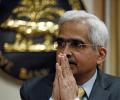
Monetary Policy Committee keeps key interest rate (repo) unchanged at 4% for 7th consecutive time; Consequently, reverse repo rate too remains unchanged at 3.35%; Bank rate also remains same at 4.25%;


Within hours of rate cut announced by RBI, United Bank has reduced the benchmark lending rate by 0.25 per cent, while other banks including market leader SBI have indicated that they would follow suit.

The Indian regulatory framework forced Citi to hibernate -- contrary to the claim that it never sleeps!

In the coming months, globally as well as in India, rice might remain a hot potato.

Planning to buy a home, car, or a vacation? Check this out

'As our per capita income increases and various demographic segments emerge, the need for various kinds of protection and risk covers will become even more explicit.'

As part of a cost-cutting plan, the bank is now dismantling its stock broking, equity research, and equity listing desks worldwide.

Banks do extensive investigation before declaring an account fraud; they owe it to us as they deal with our money. Why would they try to fix an innocent borrower? asks Tamal Bandyopadhyay.

Retail investors seem to have dipped into their mutual fund savings to meet pre-festival spending. According to data released by the Association of Mutual Funds in India (Amfi), investors pulled out Rs 6,578 crore from their systematic investment plan (SIP) accounts in September, the highest in the last 11 months. The redemptions were on the higher side during the previous festive season as well.

According to ICRA, even in a high-growth scenario, wherein the second half of FY20 sees the incremental bank credit rise to Rs 6.5-7 trn, there will still be a 40-45% year-on-year decline.

One thing is for sure: It smacks of the regulator's lack of confidence in the bank's board, points out Tamal Bandyopadhyay.

Gold jewellery demand in India is likely to decline in the second and third quarters of this fiscal due to hike in import duty, high volatility in prices and inflationary pressure, according to a report. While demand is likely to contract by 8 per cent year-on-year in the second quarter of FY23, the decline is expected to be higher at 15 per cent in the third quarter due to the exceptionally high base in the same period of FY22, Icra said in a report. According to the report, the exceptional third quarter performance in FY22 was due to the post-Covid reopening of the economy and the substantially high demand in the wedding and festive seasons.
Public sector banks' need for capital should be used to make fundamental reforms to their governance and management.

The passenger vehicle dispatches to dealers increased by 11 per cent in July as improvement in semiconductor supplies helped the companies to ramp up production ahead of the festive season, auto dealers' body SIAM said on Friday. Overall passenger vehicle wholesales increased to 293,865 units last month compared to 264,442 units in July 2021. Passenger car dispatches rose 10 per cent to 143,522 units in July from 130,080 units in the year-ago period.
